
Running a Sex Offender Check in Bienville Parish
The official starting point is the Louisiana State Police Sex Offender and Child Predator Registry. Louisiana State Police operates the statewide system, while local law enforcement accepts registrations, verifies information, and reports changes. No separate public Bienville Parish offender map or sheriff-hosted registry was located, so a parish search should not depend on finding a local list.
Begin with a full name when one is known. For location-based safety research, use the address, city, ZIP, parish, or map tools documented by the state interface. Similar names and changing addresses make photographs, physical descriptions, conviction details, and verification information important cross-checks. Registry information reflects a legal registration system, not every criminal case or every person who has committed a sexual offense.
Louisiana Results and the National Search Serve Different Needs
The state registry is the direct source for Louisiana registration information. The Dru Sjodin National Sex Offender Public Website searches participating jurisdictions across the country and is useful when a person moved, an address sits near a state line, or the relevant jurisdiction is uncertain. NSOPW sends searches to the public registries that contribute data; it is not a replacement profile maintained by Bienville Parish.
Search both systems when geography is unclear, then open the originating jurisdiction's profile for details. A no-result response must be read cautiously because spelling, aliases, search radius, jurisdiction participation, and temporary system availability can affect results. It does not establish that a person has no criminal history.
For an address search, note the radius and the map center before comparing two result sets. A city or ZIP boundary is not the same thing as a parish boundary, and a nearby registered address may fall outside the selected place. For a name search, try the documented alias information only after reviewing the initial result, then use photographs and physical details to avoid confusing people who share a name.
Searching the Louisiana Sex Offender and Child Predator Registry
The Louisiana State Police registry provides name and location routes, plus public notices and registry information. Its public interface should be used under its posted conditions. Because the system is statewide, narrow a place search to Bienville Parish or a known municipality only when the search controls support that choice; do not assume that typing “Bienville” into an unrelated field creates a parish filter.
- Open the official Louisiana registry and read and accept its conditions of use.
- Choose a name search or a location option using the address, city, ZIP, parish, or map controls available.
- Review the result list without relying on name alone; compare the photograph and physical description.
- Open the full profile and confirm the address, offense, conviction jurisdiction, tier, status, and verification information.
| Field Label | Type | Required | Notes |
|---|---|---|---|
| Last name | Text | Search-dependent | Use the registered spelling and check known aliases in results. |
| First name | Text | No | Helps narrow common surnames. |
| Address, city, or ZIP | Text/select | No | Supports a location search when the person is unknown. |
| Parish | Select | No | Choose Bienville when the interface offers a parish filter. |
| Radius or map | Map/location | No | Shows results around a supplied place; boundary and distance settings matter. |
Recognizing the Official Registry Screens
The Louisiana State Police registry information page is the authoritative state doorway.
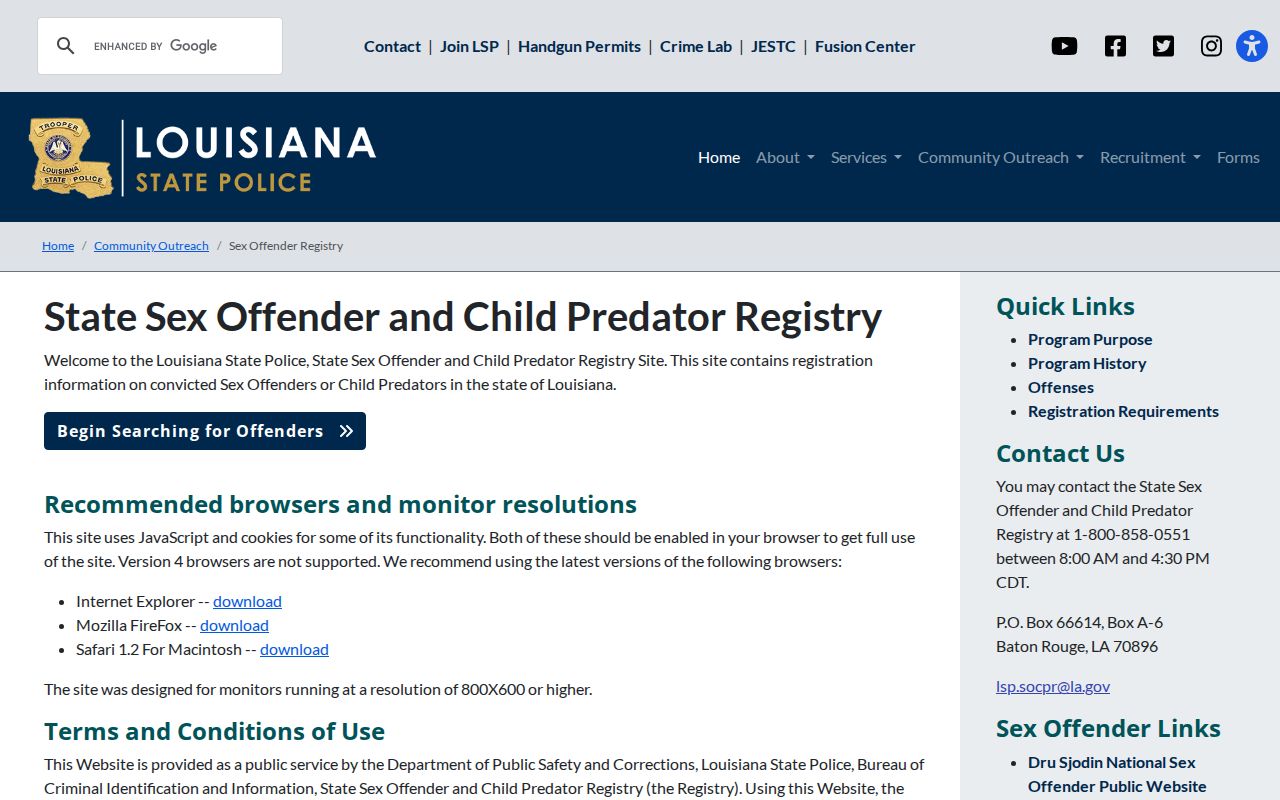
Use its links and instructions to avoid look-alike commercial pages. For searches beyond Louisiana, the national public registry site offers the cross-jurisdiction route.
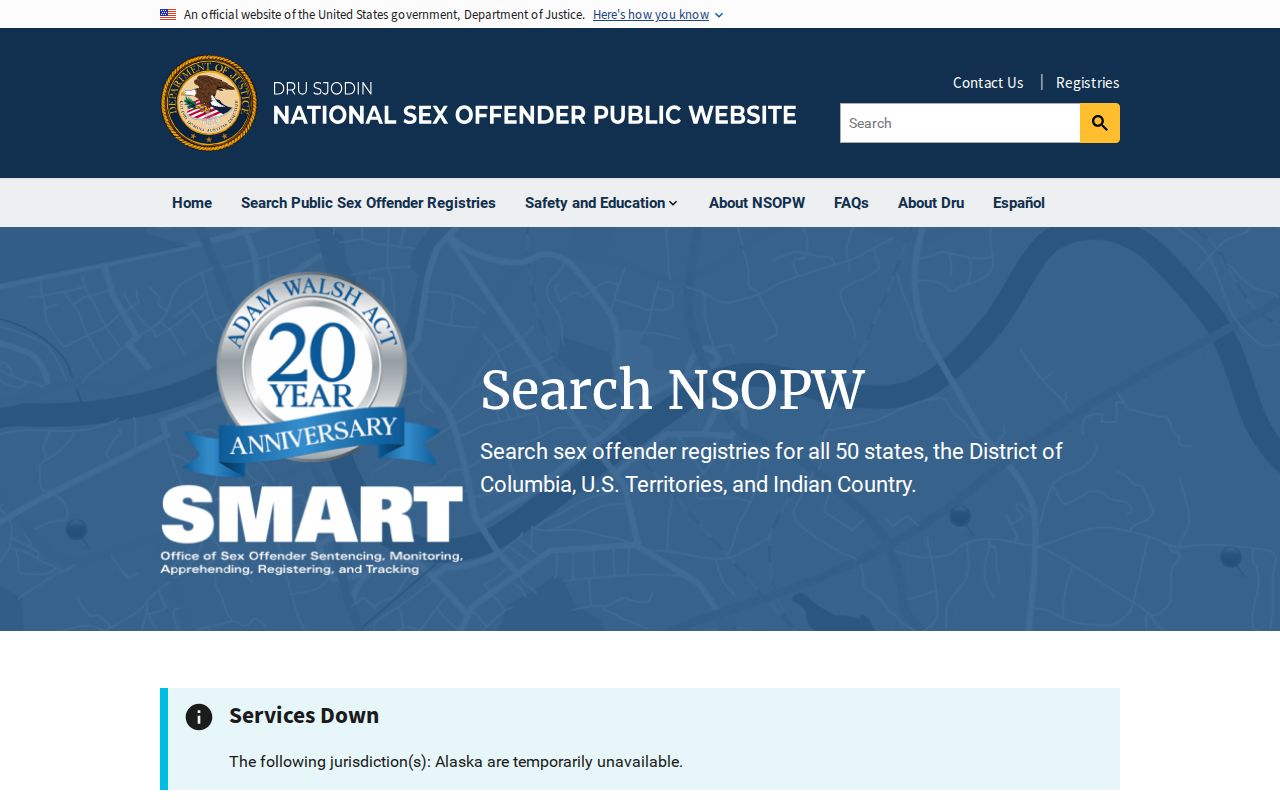
The national result should lead back to the contributing jurisdiction's record, where status and profile details can be checked.
What a Registry Profile Shows
A sampled public profile included identity, physical description, addresses, vehicle information, conviction and offense data, tier or duration information, and registration details. The exact display varies by record. Public profiles do not provide the complete police investigation, court file, victim information, or a comprehensive criminal-history report.
| Name & Aliases | Registered identity and any public alternate names used to distinguish records. |
|---|---|
| Photo & Physical Description | Photograph plus descriptors such as sex, race, height, weight, hair, eyes, and birth information when displayed. |
| Registered Address | Residence and other public location information reported under Louisiana registration rules. |
| Offense & Statute | Qualifying offense, conviction jurisdiction, dates, and statutory details shown by the profile. |
| Level / Tier | Louisiana tier and registration-duration information, which should not be treated as a prediction of conduct. |
| Registration Status | Compliance or absconder indicators and registration or verification dates when made public. |
A Registry Result Is Not a Complete Criminal History
The registry answers a narrow question: whether a person is publicly registered and what registration information is available. It does not list every arrest, dismissed charge, non-qualifying conviction, sealed matter, or court event. For a specific prosecution, use the Bienville Parish Clerk of Court channels described in Criminal Court Cases. For custody and booking questions, use the Arrest History routes.
The reverse is also true. A court name search is not a reliable substitute for the current registry because registration addresses, compliance indicators, vehicle details, and verification data are maintained through the registry process. Match the source to the question.
Registration Requirements and Levels in Louisiana
Louisiana uses three statutory tiers. The research documents baseline durations of 15 years, 25 years, and life, with in-person renewal frequencies that rise by tier. Individual obligations can depend on the offense, judgment, later law, and other circumstances, so the public profile and official agency guidance control for a particular person.
The Louisiana Legislature publishes the registration-duration law used to verify the statutory categories.
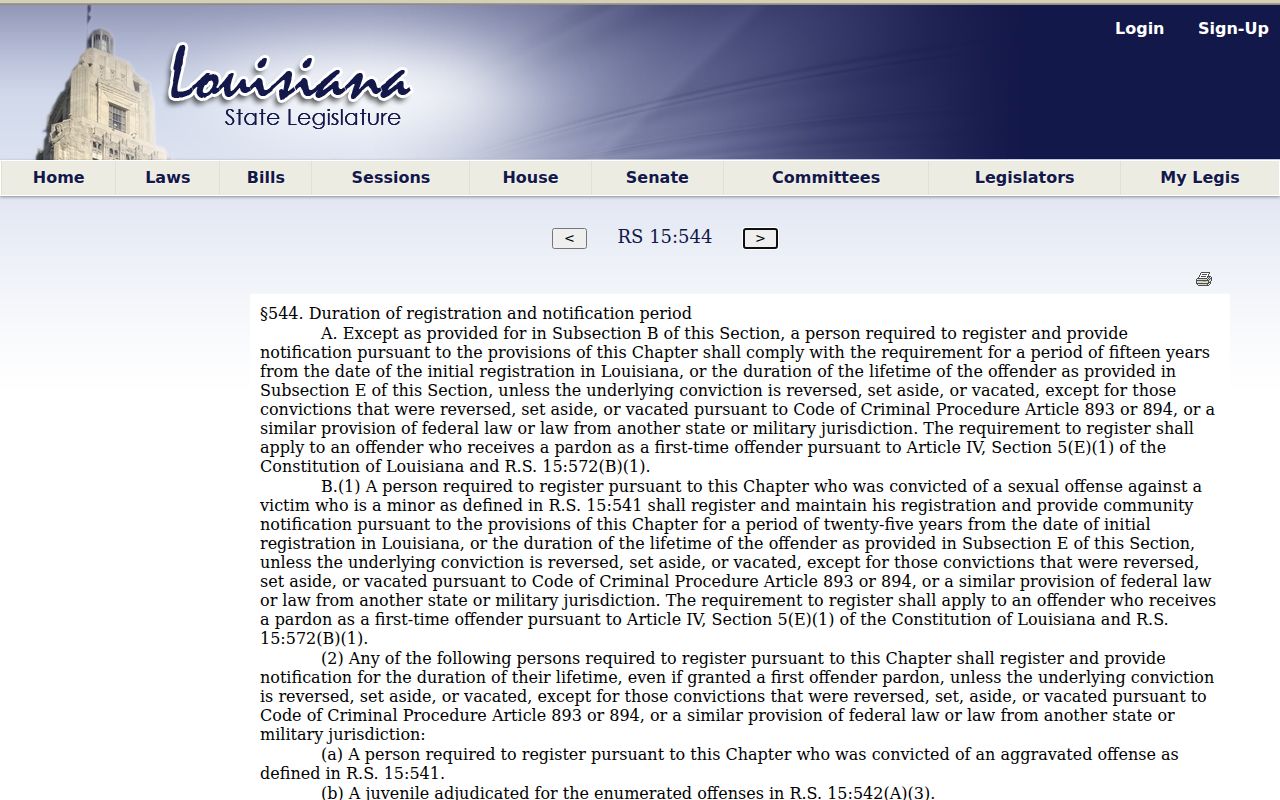
The statute is the source for the tier framework; the public profile and responsible agency should still be consulted for an individual's current obligation.
| Level / Tier | Duration | Verification Frequency |
|---|---|---|
| Tier I | 15 years | Annual in-person renewal |
| Tier II | 25 years | Semiannual in-person renewal |
| Tier III | Life | Quarterly in-person renewal |
Bienville Parish Sheriff Handles the Local Registration Step
The Bienville Parish Sheriff's Office is the practical local contact for registration and verification questions. Its official page identifies the sheriff as the parish's chief law-enforcement officer and parish jailer. The verified public contact is 100 Courthouse Drive, Suite 100, Arcadia, with phone 318-263-2215. Published general office hours are 8:00 a.m. to 4:30 p.m. weekdays.
A caller should state that the question concerns sex-offender registration before visiting, because the research did not identify a separately published registration-unit extension, appointment policy, or online local list. The sheriff can address local procedure; Louisiana State Police remains the statewide registry operator and the public profile source.
What To Do When an Address or Status Looks Out of Date
First record the profile's source, status, and displayed verification date. Re-run the search with aliases or an address route, and compare the Louisiana profile with NSOPW. Do not confront the registrant or household. For a possible data issue or an immediate public-safety concern, use the contact instructions on the Louisiana registry or contact the Bienville Parish Sheriff's Office through its verified number.
Registry data can change after an agency receives and processes a move, verification, court order, or compliance report. A discrepancy is a reason to ask the responsible agency, not proof of a violation. Emergencies belong with 911; ordinary record questions belong with registry staff or the sheriff.
Lawful Use and Community Notification
Public registry information supports personal, family, and community safety planning. Louisiana law also establishes notification duties tied to registration. The public search is informational: it is not authority to trespass, investigate a home, publish private household information, or take enforcement action. Report suspected noncompliance to law enforcement and let the responsible agency verify it.
Keep a record of the official profile URL and the date checked when the information informs a personal safety plan, because public details can change. Recheck the originating Louisiana profile instead of relying on a screenshot or third-party copy.
Use registry information lawfully: Louisiana registry information must not be used to harass, threaten, intimidate, or commit a crime against a registrant or anyone at a listed address. Do not use a public profile for discrimination or any decision the law does not permit.